Malloy, Kerri J.
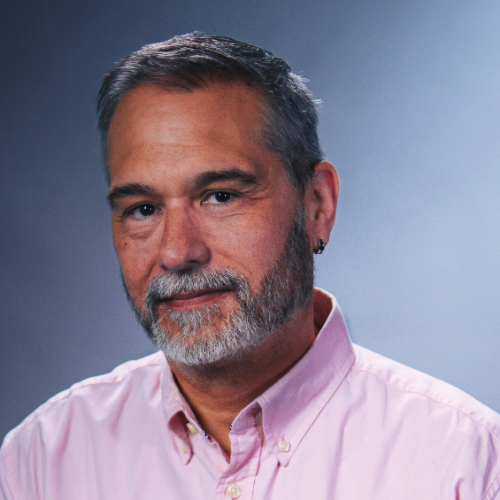
Associate Professor and Program Coordinator
Native American and Indigenous Studies
Preferred: kerri.malloy@sjsu.edu
Telephone
Preferred: 408-924-5861
Office Hours
Tuesdays and Thursdays 10:00 AM - 11:00 AM (DMH 224)
Education
- Ph.D., Holocaust and Genocide Studies, Gratz College, 2021.
- M.Jur., Indian Law, The University of Tulsa College of Law, 2016.
- B.A., Native American Studies, Humboldt State University, 2014.
- B.A., Economics, Humboldt State University, 2014.
Bio
Kerri J. Malloy (Yurok/Karuk) is an Associate Professor of Native American and Indigenous Studies at San José State University and Coordinator of the Native American and Indigenous Studies Program. His research examines anti-Indigenous violence, Indigenous rights, transitional justice, federal Indian law and policy, and the ways Native nations and communities pursue redress, repair, and renewal after genocide and mass violence.
Dr. Malloy’s scholarship focuses especially on California Indigenous histories and the ongoing legal, political, and public memory consequences of settler colonialism. His publications appear in the Journal of History, International Journal of Qualitative Studies in Education, Science Education and Civic Engagement, Wičazo Ša Review, and csuglobaljournal. He also co-edited the special issue “California Genocide and Healing” of the Humboldt Journal of Social Relations. His current book projects include The New Tribal Diplomacy, co-authored with A. R. Holmes, and the co-edited volume Victims, Survivors, and the Implications of Terminology, co-edited with C. Ramos.
His current research also includes work on transitional justice, Indigenous data sovereignty, Native American and Indigenous student experiences in higher education, and Critical Indigenous Memory Studies. Across these projects, Dr. Malloy asks how law, policy, education, and public memory can better account for historic and ongoing harms while supporting Indigenous sovereignty, resurgence, and futurity.
Dr. Malloy’s work is closely connected to urgent public conversations about Native sovereignty, repatriation, land return, tribal consultation, Indigenous data governance, public memory, and the responsibilities of universities, governments, and cultural institutions. In California and across the United States, debates over curriculum, Native American Graves Protection and Repatriation Act compliance, federal recognition, land stewardship, and the political status of Native nations continue to reveal the unfinished nature of colonial violence.
His scholarship approaches these issues through the fields of Native American and Indigenous Studies, Genocide Studies, Critical Indigenous Memory Studies, transitional justice, and federal Indian law. Rather than treating anti-Indigenous violence as only a historical event, his work examines how its structures continue through law, land policy, public education, institutional practice, and selective memory. This research contributes to a broader understanding of how universities and public institutions can move beyond acknowledgment toward accountability, repair, and systemic change.
Dr. Malloy’s research, teaching, and public scholarship are shaped by more than fifteen years of work with federally recognized tribes and tribal organizations. That professional experience continues to inform his approach to federal Indian law, tribal governance, tribal-state relations, and the practical stakes of Indigenous rights.
Before joining San José State University, Dr. Malloy taught at California State Polytechnic University, Humboldt, where his work in Native American Studies, genocide studies, and community-engaged education developed alongside his commitments to Indigenous communities in Northern California. At SJSU, he is helping build Native American and Indigenous Studies as a program rooted in California Indigenous histories, community accountability, and Indigenous futures.
Dr. Malloy received the 2025 Leadership in Education Award from California State Assemblymember Ash Kalra and has held fellowships with Binghamton University’s Institute for Genocide and Mass Atrocity Prevention, The Op-Ed Project, and the Auschwitz Institute’s Raphael Lemkin Seminar. His public scholarship has appeared in outlets including The Conversation, CalMatters, The Los Angeles Times, the Mercury News, and Governing.
Links
- SJSU Department of Sociology and Interdisciplinary Social Science
- College of Social Science
- Kerri Malloy’s ORCID ID